Posted by iBuyLesPaul.com
March 2, 2026
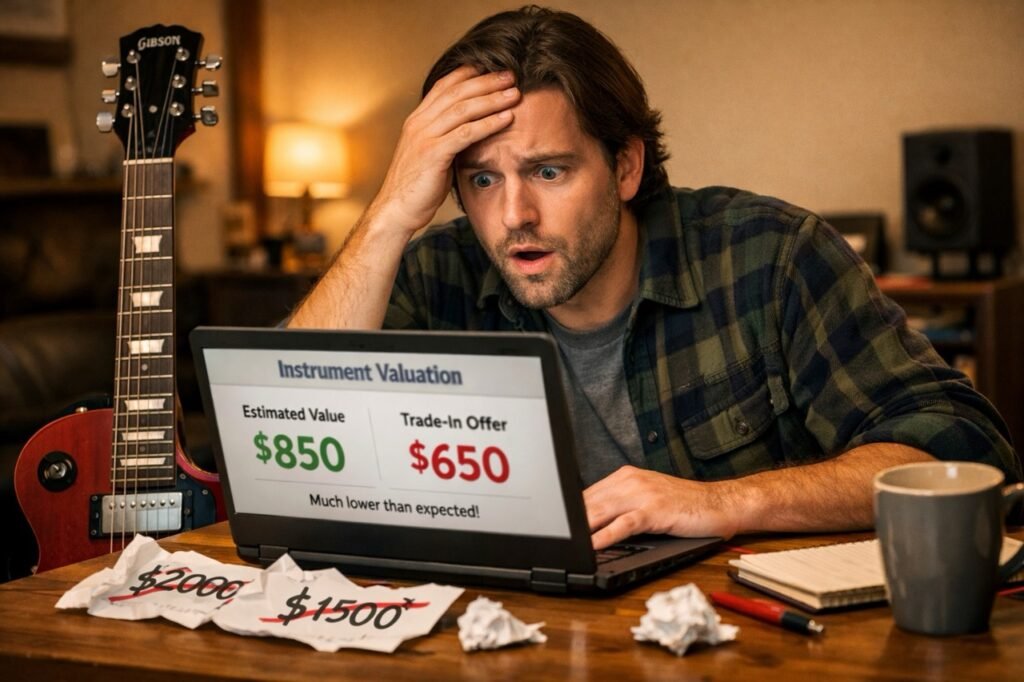
I’m about to make some people angry.
After buying hundreds of Les Pauls over the years, I have these conversations almost daily. Someone contacts me convinced they’re sitting on a goldmine. They’ve done their “research” (read: checked a few wildly optimistic Reverb listings). They’re ready to retire on what their guitar is worth.
Then I give them the actual market value, and they think I’m trying to rip them off.
I’m not. The market just isn’t what they think it is.
Here are the Les Pauls that everyone overvalues—and why.
1. Les Paul Studios (Most Years)
What people think: “It’s a Gibson! It’s a Les Paul! It’s gotta be worth $2,000+”
Reality: $800-$1,200 for most used Studios
Studios are great guitars. They play well, sound good, and they’re legitimate Gibsons. But Gibson made tons of them, and they’ve always been the “budget” Les Paul. The used market is flooded.
Unless it’s a particularly desirable year, has some rare feature, or is in absolutely pristine condition, your Studio is worth about what a decent Epiphone Custom goes for. Sometimes less.
I know that stings. But oversaturated market + entry-level model = modest resale value.
2. 2000s Standards with Weight Relief
What people think: “It’s a Les Paul Standard from the 2000s! That’s peak Gibson quality!”
Reality: $1,400-$1,900 depending on condition and exact year
Here’s the problem: Gibson started chambering and weight-relieving Les Pauls in the 2000s to make them lighter. Purists hated it. They claimed it killed the tone (debatable), and it definitely killed the resale value.
A 2006 weight-relieved Standard isn’t commanding vintage prices. It’s not even commanding “solid wood modern Gibson” prices. It sits in this weird middle zone where it’s too new to be vintage and too modified to be desirable.
Add in the fact that Gibson’s QC was inconsistent during this era, and you’ve got guitars that people list for $2,500 and can’t sell at $1,600.
3. Epiphone Les Pauls (Yes, All of Them)
What people think: “But it’s a real Epiphone! Not some knockoff! These are collectible!”
Reality: $200-$600 for most models, even pristine ones
Look, I love Epiphones. They’re fantastic guitars for the money. But they’re not rare, they’re not vintage (unless you’re talking about the actual vintage Japanese-made ones from the ’70s-’80s, which is a different story), and there are thousands of them on the used market at any given moment.
Your 2015 Epiphone Les Paul Standard? It retailed for $500. Used, it’s worth $300-$400. Your Epiphone Custom? Maybe $450-$550 if it’s mint.
“But mine has upgraded pickups!” Cool. You might get an extra $50-$75. Maybe.
The hard truth: Epiphones don’t appreciate. They depreciate like cars.
4. Les Paul Juniors and Specials (Modern Reissues)
What people think: “Simple, vintage-inspired design! These are going up in value!”
Reality: $700-$1,000 for most modern Juniors/Specials
Original 1950s Les Paul Juniors and Specials? Absolutely valuable. Five-figure guitars in many cases.
Modern reissues from the 2000s-2010s? Not even close.
Gibson has made so many Junior and Special reissues over the years that they’ve saturated the market. Every few years they do another run with some slight variation (different pickup, TV finish, whatever), and collectors buy them thinking they’ll be rare.
They’re not rare. They’re everywhere. And the resale value reflects that.
5. “Lawsuit Era” Guitars That Aren’t Actually Lawsuit Guitars
What people think: “This is a 1970s Japanese Les Paul copy! Lawsuit era! Super valuable!”
Reality: $300-$800 depending on brand and condition
Here’s the thing about “lawsuit era” guitars: most of them were never actually involved in any lawsuit. That’s a marketing myth that got out of control.
Yes, some high-end Japanese copies from brands like Tokai, Greco, and Burny can be valuable. But that random “Cimar by Ibanez” or “Aria Pro II” Les Paul copy your uncle gave you? It’s a decent guitar, but it’s not a collector’s item.
People see “Made in Japan” and “1970s” and think they’ve struck gold. Most of these guitars are worth $400-$600. Some less.
6. Heavily Modified Les Pauls
What people think: “I upgraded everything! Seymour Duncans, locking tuners, custom wiring! Worth way more now!”
Reality: Worth 30-50% less than stock
Unless you’re a known modder with a proven track record, your modifications hurt resale value. Period.
Collectors want original. Players want stock specs they can trust. Nobody wants to buy someone else’s science project and hope it was done right.
I’ve seen $2,500 Les Pauls turned into $1,200 guitars because someone routed the body for a Floyd Rose or installed a piezo system. The work might’ve cost $800, but it destroyed the value.
7. Signature Models Nobody Remembers
What people think: “It’s a signature model! Limited edition! Rare!”
Reality: $900-$1,500 unless it’s a major artist signature
Gibson has made signature Les Pauls for dozens of artists. Some are iconic (Slash, Jimmy Page, Joe Perry). Most aren’t.
That Zakk Wylde bullseye Les Paul? Cool guitar, but the market is flooded with them. They made thousands.
That Gary Moore Signature? Beautiful guitar, but Gary Moore isn’t a household name in 2025, and his signature model isn’t commanding premiums.
Unless it’s a true icon or genuinely limited (like, numbered out of 50), signature models don’t hold value the way people think.
The Plot Twist: The Undervalued Ones
Now here’s what’s interesting. While everyone’s overvaluing the guitars above, they’re undervaluing these:
1970s Les Paul Customs with the “Volute” neck – Used to be dismissed as “the wrong era.” Now collectors are catching on. Still underpriced.
Late ’90s Les Paul Classics – Solid construction, no weight relief, flying under the radar. Great player value.
2010s Les Paul Traditionals – Spec’d like vintage guitars, modern reliability, not getting the respect they deserve yet.
People are sleeping on these while chasing overvalued models that’ll never hit their inflated asking prices.
Why This Matters
If you’re trying to sell a Les Paul and you’re basing your price on what you want it to be worth, you’re going to be frustrated.
The market doesn’t care about:
- What you paid for it
- How much you love it
- What some forum expert told you it’s worth
- That one Reverb listing that’s been sitting unsold for 11 months at $3,200
The market cares about supply, demand, and current transaction prices.
I’m not trying to lowball you. I’m trying to save you months of frustration listing your guitar at an unrealistic price while it collects dust.
The Bottom Line
Most Les Pauls are worth less than their owners think. Not because they’re bad guitars—many are fantastic. But because the market is what it is.
If you want to know what your Les Paul is actually worth in today’s market—not what you hope it’s worth, not what it was worth in 2021, but what someone will pay for it right now—talk to someone who buys them regularly.
That’s me.
Want to know what your Les Paul is really worth? Send me photos and details at iBuyLesPaul.com. I’ll give you a straight answer based on current market reality, not hopeful thinking. If we agree on price, I move fast. If we don’t, at least you’ll know where you stand.
Honesty might not be what you want to hear, but it’s what you need to know.
Play what inspires you.
Sell what doesn’t.
That’s how great guitars keep making music.