Posted by iBuyLesPaul.com
February 9, 2026
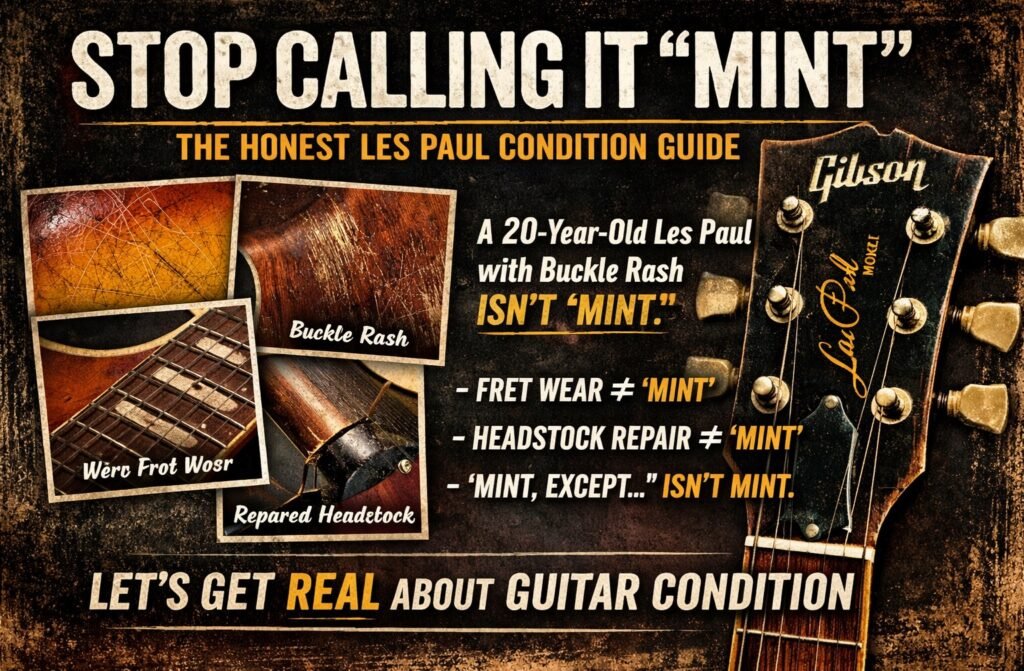
If you’ve spent more than five minutes shopping for a Les Paul, you’ve seen it:
MINT CONDITION
On a guitar that’s
• 20 years old
• Has buckle rash
• Shows fret wear
• Smells like a bar gig from 2009
Let’s be clear right out of the gate:
Most Les Pauls listed as “mint” are not mint.
They’re clean. They’re nice. Sometimes they’re even excellent.
But mint? No.
And pretending otherwise hurts buyers, sellers, and the entire vintage market.
So let’s fix it.
What “Mint” Actually Means (And Why It Almost Never Applies)
In the real world—not marketing copy—mint means indistinguishable from new.
That means:
- No finish wear
- No buckle rash
- No fret wear
- No checking
- No cloudy hardware
- No touch-up, anywhere
If the guitar has left the case, been gigged, or even played regularly at home, the odds of it still being mint are close to zero.
Here’s the uncomfortable truth:
A 15–30 year old Les Paul that’s truly mint is either case-kept, museum-level… or suspicious.
And that’s not an insult. It’s reality.
“Reverb Mint” vs. Real Mint
Somewhere along the way, “mint” became shorthand for
“Looks good in photos if you don’t zoom.”
That’s how we ended up with listings like:
- “Mint, light buckle rash”
- “Mint except frets”
- “Mint, small headstock repair”
That’s not mint.
That’s excellent at best.
Calling everything mint doesn’t make your guitar worth more—it just makes buyers distrust the listing.
The Condition Labels That Actually Matter
Let’s talk honestly.
🟢 Mint
- As close to new as humanly possible
- No visible wear under normal inspection
- Rare, and should be priced accordingly
🔵 Excellent
- Light, honest play wear
- Minor finish marks
- Light fret wear
- This is where most great Les Pauls live
🟡 Very Good
- Noticeable wear
- Dings, rash, fret wear
- Still a killer player, just not a case queen
🔴 Player Grade
- Repaired breaks, refret, mods
- Often sounds incredible
- Often overpriced by sellers chasing “mint money”
Here’s the part sellers hate hearing:
Condition doesn’t change the guitar—pricing does.
The Wear That Hurts Value (And the Wear That Doesn’t)
Not all flaws are equal.
Usually Fine:
- Light buckle rash
- Finish checking
- Small dings
- Honest fret wear
Red Flags:
- Headstock breaks (even “good ones”)
- Overspray
- Hidden repairs
- Undisclosed mods
Calling a repaired guitar “mint” doesn’t make it sell faster.
It makes knowledgeable buyers walk away instantly.
Why This Matters More Than Ever
The Les Paul market is maturing.
Buyers are:
- Smarter
- More educated
- Less tolerant of hype
And when everything is mint… nothing is.
Over-labeling condition doesn’t raise prices long-term.
It erodes trust—and trust is what actually moves guitars.
Our Rule at iBuyLesPaul.com
We don’t chase buzzwords.
We don’t inflate condition.
We describe guitars the way we’d want them described to us.
Because the best compliment a buyer can give isn’t:
“This was mint.”
It’s:
“It was exactly as described.”
Final Thought (Read This Twice)
A Les Paul doesn’t need to be mint to be valuable.
It needs to be honest.
And the next time you see a “mint” Les Paul with buckle rash?
You’re not being picky.
You’re just paying attention.
Play what inspires you.
Sell what doesn’t.
That’s how great guitars keep making music.