Posted by iBuyLesPaul.com
January 12, 2026
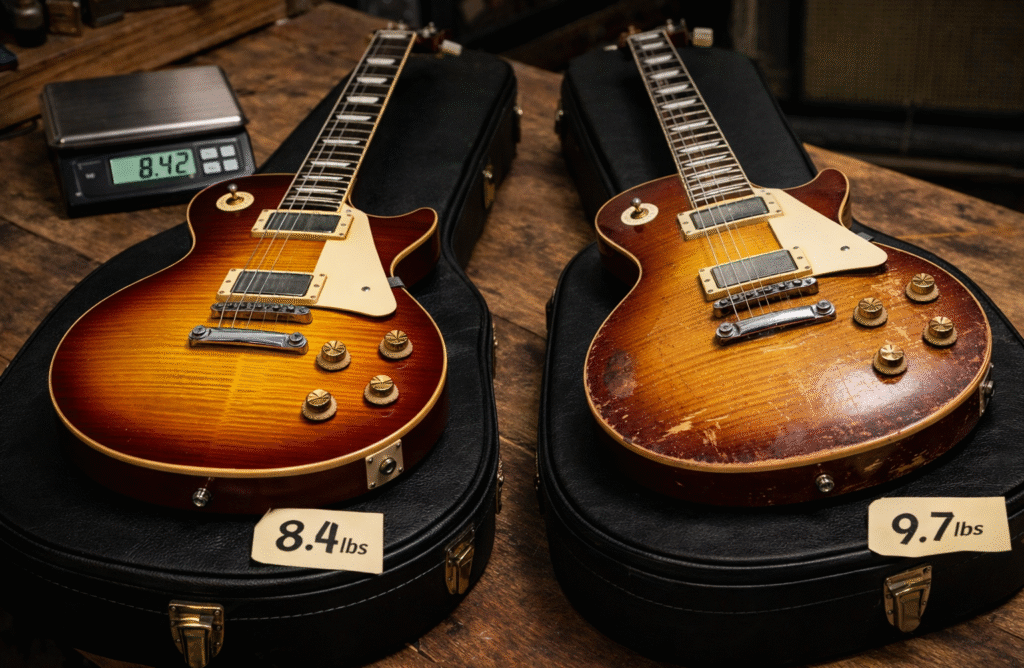
At first glance, two Gibson Les Pauls from the same year might seem identical. Same model. Same factory. Same logo on the headstock.
Yet in the real market, one might sell instantly while the other struggles—or sells for thousands less.
Here’s why year alone doesn’t determine what a Gibson Les Paul is worth, and what actually drives value when it’s time to sell.
1. Weight Makes a Bigger Difference Than Most People Realize
Les Paul weight is one of the first things experienced buyers look at.
An 8.5 lb Les Paul often commands more interest—and money—than a 9.8 lb example, even if everything else is equal. Lighter guitars tend to be more comfortable, resonate differently, and appeal to a wider buyer pool.
Half a pound can matter. A full pound definitely does.
2. Tops, Finishes, and Visual Appeal
No two maple tops are the same.
Highly figured flame or quilt tops consistently bring stronger prices than plain tops, especially in desirable finishes like Burst, Goldtop, or Wine Red.
Even within the same model year, visual appeal alone can create a significant price gap.
3. Neck Profile: ’50s vs ’60s (and Everything in Between)
Neck shape has a major impact on demand.
Some players strongly prefer a chunky ’50s neck, while others won’t touch anything but a slim ’60s profile. Two Les Pauls from the same year—but with different necks—can attract completely different buyers.
More demand usually equals a higher selling price.
4. Originality vs Modifications
Modifications are one of the biggest value separators.
Pickup swaps, replaced tuners, changed pots, refrets, or added Bigsbys may improve playability—but they often reduce collector value. Even high-end upgrades can lower what a buyer is willing to pay.
Original parts matter. Having them included matters even more.
5. Condition and Repair History
Condition is everything.
Two guitars from the same year can differ dramatically in value due to:
- Headstock repairs
- Finish damage vs natural checking
- Fret wear or refrets
- Case condition
A clean, original example will always command a premium.
6. Market Demand Changes Faster Than People Expect
Les Paul values are not static.
Certain models, years, and specs go in and out of favor. What sold easily two years ago may be slower today. Understanding current demand—not just past reputation—is critical when pricing a guitar.
So What Is Your Gibson Les Paul Worth?
This is why online price guides and asking prices often miss the mark.
Two Gibson Les Pauls from the same year can look similar on paper—but the market sees them very differently once weight, condition, originality, and demand are factored in.
At ibuylespaul.com, We evaluate Les Pauls based on real-world sales data and hands-on experience, not guesswork.
If you’re thinking about selling, it’s worth knowing what actually separates your guitar from the rest.
Rock on,